
New London COUNTY · Naval heritage
Groton’s Submarine Escape Training Tank
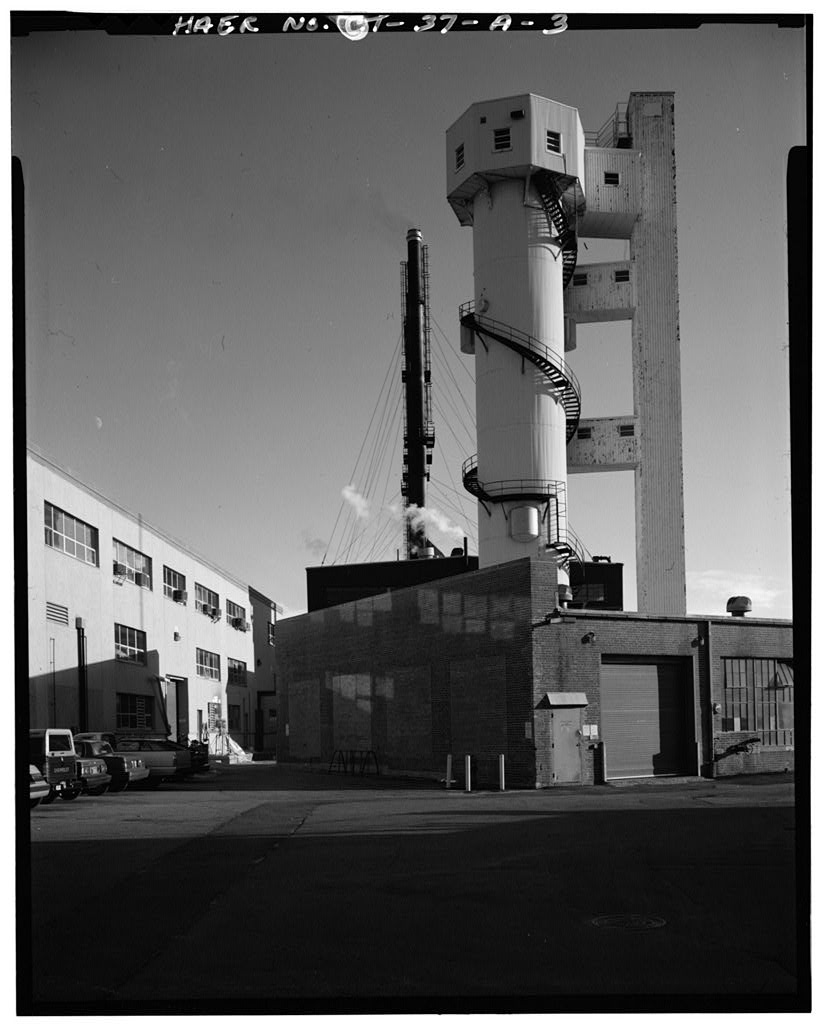
Twenty photographs document the distinctive training tower and its support buildings in October 1987, after the tank had been decommissioned.
Historical focus · 1915–1992
LOOK CLOSER · OPEN ANY IMAGE
The story in photographs
October 1987
View of escape training tank, looking south
View of escape training tank, looking south — U.S. Naval Submarine Base, New London Submarine Escape Training Tank, Albacore & Darter Roads, Groton, New London County, CT
Image credit & source
Rob Tucher; Library of Congress, Prints and Photographs Division, HABS/HAER.
No known restrictions on images made by the U.S. Government; images copied from other sources may be restricted.
Original source · Reuse termsOctober 1987
View of escape training tank, looking northeast
View of escape training tank, looking northeast — U.S. Naval Submarine Base, New London Submarine Escape Training Tank, Albacore & Darter Roads, Groton, New London County, CT
Image credit & source
Rob Tucher; Library of Congress, Prints and Photographs Division, HABS/HAER.
No known restrictions on images made by the U.S. Government; images copied from other sources may be restricted.
Original source · Reuse termsOctober 1987
View of escape training tank, looking northwest
View of escape training tank, looking northwest — U.S. Naval Submarine Base, New London Submarine Escape Training Tank, Albacore & Darter Roads, Groton, New London County, CT
Image credit & source
Rob Tucher; Library of Congress, Prints and Photographs Division, HABS/HAER.
No known restrictions on images made by the U.S. Government; images copied from other sources may be restricted.
Original source · Reuse termsOctober 1987
View of escape training tank, looking southeast
View of escape training tank, looking southeast — U.S. Naval Submarine Base, New London Submarine Escape Training Tank, Albacore & Darter Roads, Groton, New London County, CT
Image credit & source
Rob Tucher; Library of Congress, Prints and Photographs Division, HABS/HAER.
No known restrictions on images made by the U.S. Government; images copied from other sources may be restricted.
Original source · Reuse termsOctober 1987
View of escape training tank, looking up south side from 50-foot passageway, showing 25-foot blister at left,…
View of escape training tank, looking up south side from 50-foot passageway, showing 25-foot blister at left, 18-foot passageway and platform at right — U.S. Naval Submarine Base, New London Submarine Escape Training Tank, Albacore & Darter Roads, Groton, New London County, CT
Image credit & source
Rob Tucher; Library of Congress, Prints and Photographs Division, HABS/HAER.
No known restrictions on images made by the U.S. Government; images copied from other sources may be restricted.
Original source · Reuse termsOctober 1987
View, looking north from left to right, showing medical research laboratory annex, examining room, and equipment room
View, looking north from left to right, showing medical research laboratory annex, examining room, and equipment room — U.S. Naval Submarine Base, New London Submarine Escape Training Tank, Albacore & Darter Roads, Groton, New London County, CT
Image credit & source
Rob Tucher; Library of Congress, Prints and Photographs Division, HABS/HAER.
No known restrictions on images made by the U.S. Government; images copied from other sources may be restricted.
Original source · Reuse termsOctober 1987
View, looking northwest from left to right, showing pump room and dressing room
View, looking northwest from left to right, showing pump room and dressing room — U.S. Naval Submarine Base, New London Submarine Escape Training Tank, Albacore & Darter Roads, Groton, New London County, CT
Image credit & source
Rob Tucher; Library of Congress, Prints and Photographs Division, HABS/HAER.
No known restrictions on images made by the U.S. Government; images copied from other sources may be restricted.
Original source · Reuse termsOctober 1987
View, looking east from left to right, showing underwater welding/scuba room, classroom building, and medical…
View, looking east from left to right, showing underwater welding/scuba room, classroom building, and medical research laboratory annex — U.S. Naval Submarine Base, New London Submarine Escape Training Tank, Albacore & Darter Roads, Groton, New London County, CT
Image credit & source
Rob Tucher; Library of Congress, Prints and Photographs Division, HABS/HAER.
No known restrictions on images made by the U.S. Government; images copied from other sources may be restricted.
Original source · Reuse termsOctober 1987
View, looking south from left to right, showing dressing from and work/chamber room
View, looking south from left to right, showing dressing from and work/chamber room — U.S. Naval Submarine Base, New London Submarine Escape Training Tank, Albacore & Darter Roads, Groton, New London County, CT
Image credit & source
Rob Tucher; Library of Congress, Prints and Photographs Division, HABS/HAER.
No known restrictions on images made by the U.S. Government; images copied from other sources may be restricted.
Original source · Reuse termsOctober 1987
View, looking west from left to right, showing high pressure air flask room and pump room
View, looking west from left to right, showing high pressure air flask room and pump room — U.S. Naval Submarine Base, New London Submarine Escape Training Tank, Albacore & Darter Roads, Groton, New London County, CT
Image credit & source
Rob Tucher; Library of Congress, Prints and Photographs Division, HABS/HAER.
No known restrictions on images made by the U.S. Government; images copied from other sources may be restricted.
Original source · Reuse termsOctober 1987
View of escape training tank, looking east across mezzanine, showing entrance to submarine section at 110-foot level
View of escape training tank, looking east across mezzanine, showing entrance to submarine section at 110-foot level — U.S. Naval Submarine Base, New London Submarine Escape Training Tank, Albacore & Darter Roads, Groton, New London County, CT
Image credit & source
Rob Tucher; Library of Congress, Prints and Photographs Division, HABS/HAER.
No known restrictions on images made by the U.S. Government; images copied from other sources may be restricted.
Original source · Reuse termsOctober 1987
Interior view of submarine section at 110-foot level, escape training tank, showing ladder to escape tank, looking south
Interior view of submarine section at 110-foot level, escape training tank, showing ladder to escape tank, looking south — U.S. Naval Submarine Base, New London Submarine Escape Training Tank, Albacore & Darter Roads, Groton, New London County, CT
Image credit & source
Rob Tucher; Library of Congress, Prints and Photographs Division, HABS/HAER.
No known restrictions on images made by the U.S. Government; images copied from other sources may be restricted.
Original source · Reuse termsTHE STORY BEHIND THE PHOTOGRAPHS
People, places, and change.
A submarine base takes shape
The arrival of submarines in 1915 helped transform the Navy’s Thames River property in Groton into a center of submarine activity. A submarine school followed, and the base expanded substantially during the world wars. The Navy’s institutional history places training alongside vessels, shore facilities, and personnel as a defining part of the installation. This collection follows one particularly visible component of that training landscape: a tall steel tank built in 1929–1930. Although the installation carries the name Naval Submarine Base New London, the photographed structure stood on the Groton side of the river. [4] [2]
A tower and its supporting rooms
The tank rose approximately 119 feet, with simulated submarine compartments and associated equipment arranged for specialized training and research. It formed part of a complex of smaller buildings containing instructional, medical, and mechanical spaces. The historical report describes a facility that combined architecture with pumps, machinery, and carefully controlled environments. Its history also belongs to the Navy’s medical research work. The building was therefore more than a prominent landmark: its rooms and connected equipment supported a particular institutional response to the demands of submarine service. [2]
Repeated adaptation and eventual closure
The facility changed throughout its working life. An elevator was added in 1932, and subsequent additions and alterations followed in 1937 and later decades. Those layers show continuing adaptation rather than a single untouched 1930 installation. The historical survey states that the tank was decommissioned in 1982 because of structural deterioration. The Navy’s base history remembers the tower as a landmark from 1930 to 1992. The distinction is useful: a structure can remain visible in a community after the specialized activity that created it has ended. [2] [4]
What the 1987 camera preserved
Rob Tucher photographed the complex in October 1987. The selected views document the tower, exterior connections, interior spaces, and equipment after decommissioning. They do not show an operating training session, and the archive does not present them as such. Seen together, the photographs explain the scale of the building and the many supporting elements around it. Their value lies in preserving an installation that was already facing removal: an unusual piece of the naval landscape, recorded at close range while its material history could still be studied. [3] [2]
Sources & further reading (4)
Keep the sources close.
Download this collection’s notes, timeline and image credits. Photographs link to their original archives and require an internet connection.
Building dates and photograph dates are recorded separately. Later photographs are identified in their captions; unknown exposure dates remain unknown. Follow each image’s credit and reuse terms.