SILENT GROUNDS COLLECTIVE · A NONPROFIT EDUCATIONAL ARCHIVEVisit SGC
SGC Digital ArchivesA Connecticut Non Profit Archive

COLLECTION 002 · SGC-SB-002

Saint Bernard Cemetery

New Haven, Connecticut

Burial references, historical pages, memorial leads and surviving records that connect generations of New Haven history.

Download archiveZIP · Searchable offlineView all downloads
BLESSING IN THE 1900 HISTORYSeptember 1, 1851
CONSECRATION IN THE 2019 ARTICLE1854

The 1900 history also dates the land purchase to June 28, 1851. Both accounts remain visible; the exact opening requires further original evidence.

39 references & leads5 historical scans26 sources & custodiansEdition: September 8, 2026
Initial research collection. This is an incomplete archive. Original death certificates, burial permits, the full Hale survey and an authenticated plot map have not been obtained. The two related indexes are separate from cemetery references.
Read the full history

EXECUTIVE HISTORY

A burial ground within New Haven’s Catholic history.

The 1900 diocesan history describes Saint Bernard’s origins after the early Catholic burial ground at Christ’s Church. It dates the land purchase to June 28, 1851 and the blessing to September 1, 1851, followed by an eighteen-acre addition in 1858 and another purchase in 1876. These are the historical author’s dates, preserved with the original page. Read the 1900 account.

A 2019 archaeological article gives 1854 as the consecration year. The archive keeps the two accounts visible rather than treating them as an established single opening date. Some earlier Christ’s Church monuments were moved to Saint Bernard; a moved stone alone does not establish that a person’s remains were reinterred. Compare the 2019 research.

The surviving research spans clergy, parish families, cemetery administration and the city’s wider Catholic institutions. Today Saint Bernard at 520 Columbus Avenue is administered through Saint Lawrence Cemetery. The 1934 Hale survey and the operator’s original registers remain priorities for locating individuals and confirming plots. Current operator.

THE ILLUSTRATED ARCHIVE

The community beyond the cemetery gate

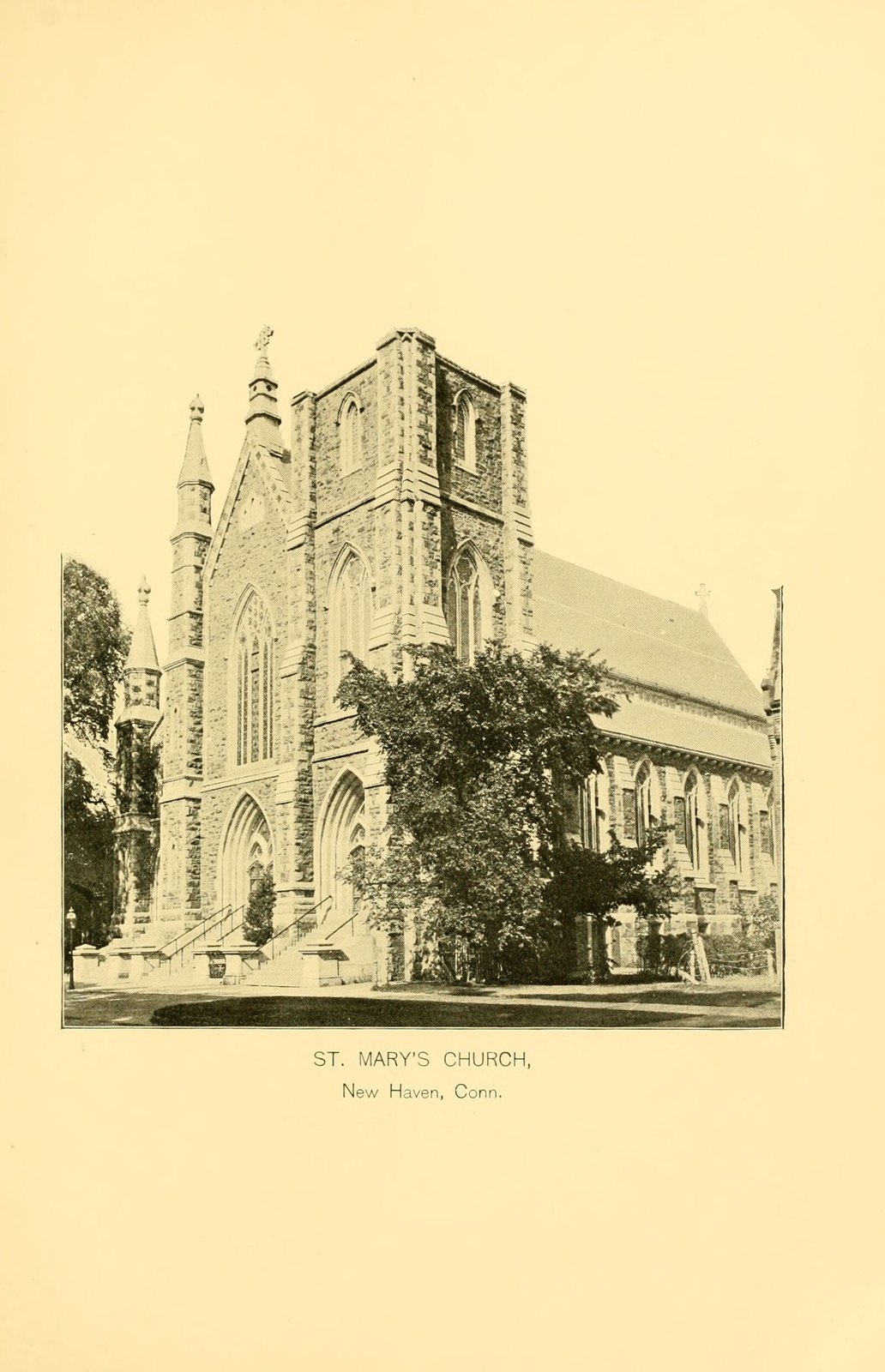
St. Mary’s on Hillhouse Avenue

PHOTOGRAPH PUBLISHED · 1900

St. Mary’s on Hillhouse Avenue

This period photograph shows the later St. Mary’s Church, part of the Catholic community whose history surrounds Saint Bernard. It is a community context image; it does not depict the cemetery or the original Christ’s Church burial ground.

James H. O’Donnell, History of the Diocese of Hartford(1900), plate after printed page 336. University of Connecticut Libraries / Internet Archive. Public domain.Read the source
Reading the cemetery’s origins in print

HISTORICAL PAGE · 1900

Reading the cemetery’s origins in print

The land purchases and blessing dates appear within a wider parish narrative. Opening the page shows how cemetery history was recorded alongside schools, clergy and church buildings.

James H. O’Donnell, History of the Diocese of Hartford (1900), p.336; Internet Archive. Public domain.Read the source
A community remembered across changing burial places

Saint Bernard’s origins belong within New Haven’s Catholic community and the limits of its earlier burial space. The 1900 diocesan history dates land purchase and blessing to 1851, while later archaeological scholarship gives a different consecration year. These are distinct, attributed accounts. Preserving the discrepancy allows students to investigate how historical dates are transmitted rather than treating a later summary as automatic correction.

The movement of some monuments from the earlier Christ’s Church setting adds another challenge. A stone can be moved without proving that remains were reinterred beneath it. Church histories, inscriptions, archaeological findings and cemetery registers therefore answer different questions. The 1858 and 1876 land acquisitions described in the diocesan account also show that a cemetery’s physical extent could change after its beginning.

Church photographs provide community context, but must not be mistaken for photographs of the cemetery or the original burial ground. Likewise, the current operator’s office address should not be substituted for the cemetery’s Columbus Avenue location. A fuller history would compare original land and interment records with the complete Hale survey and the surviving memorial landscape, keeping individual identities separate from broader parish history.

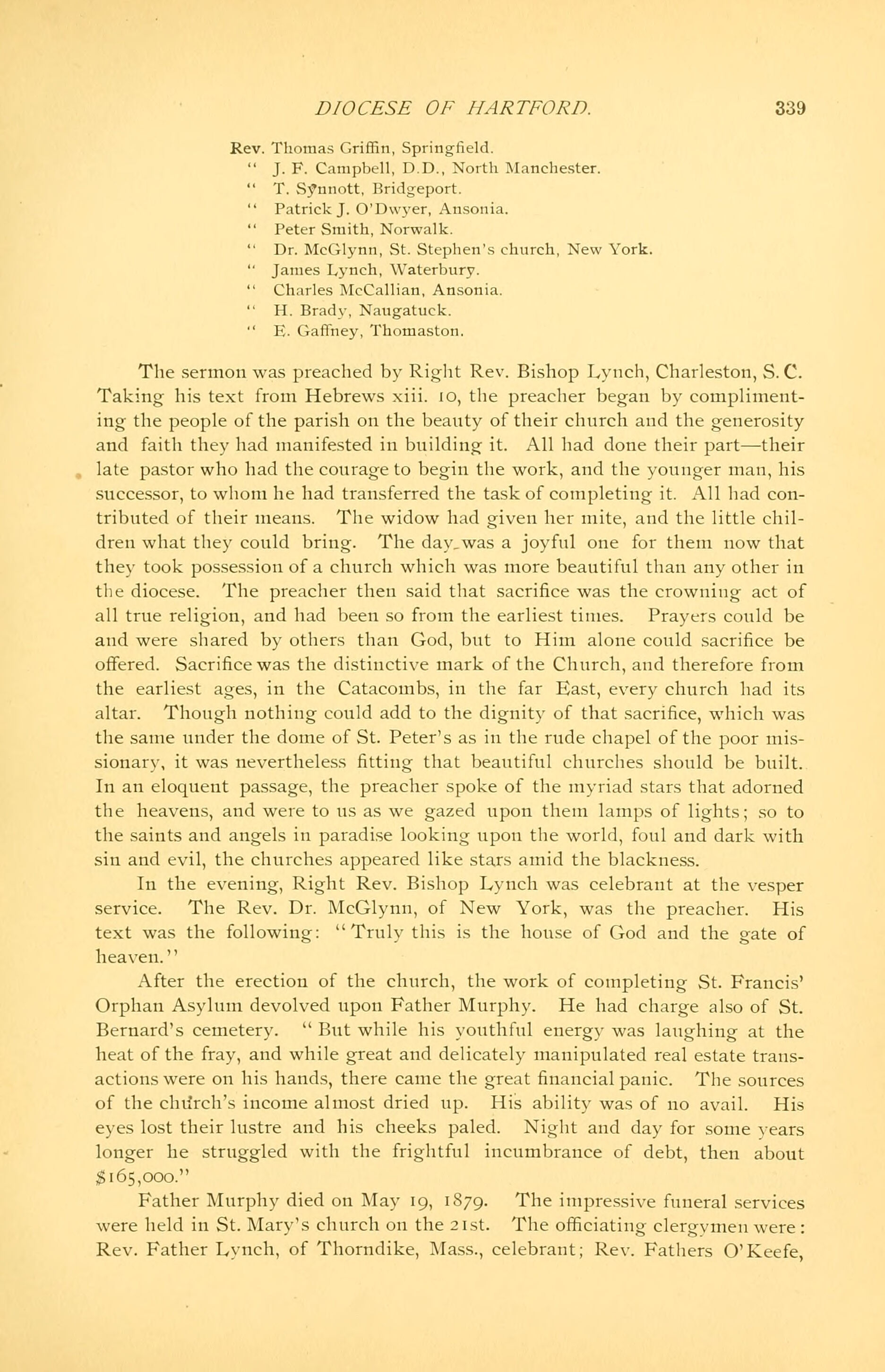
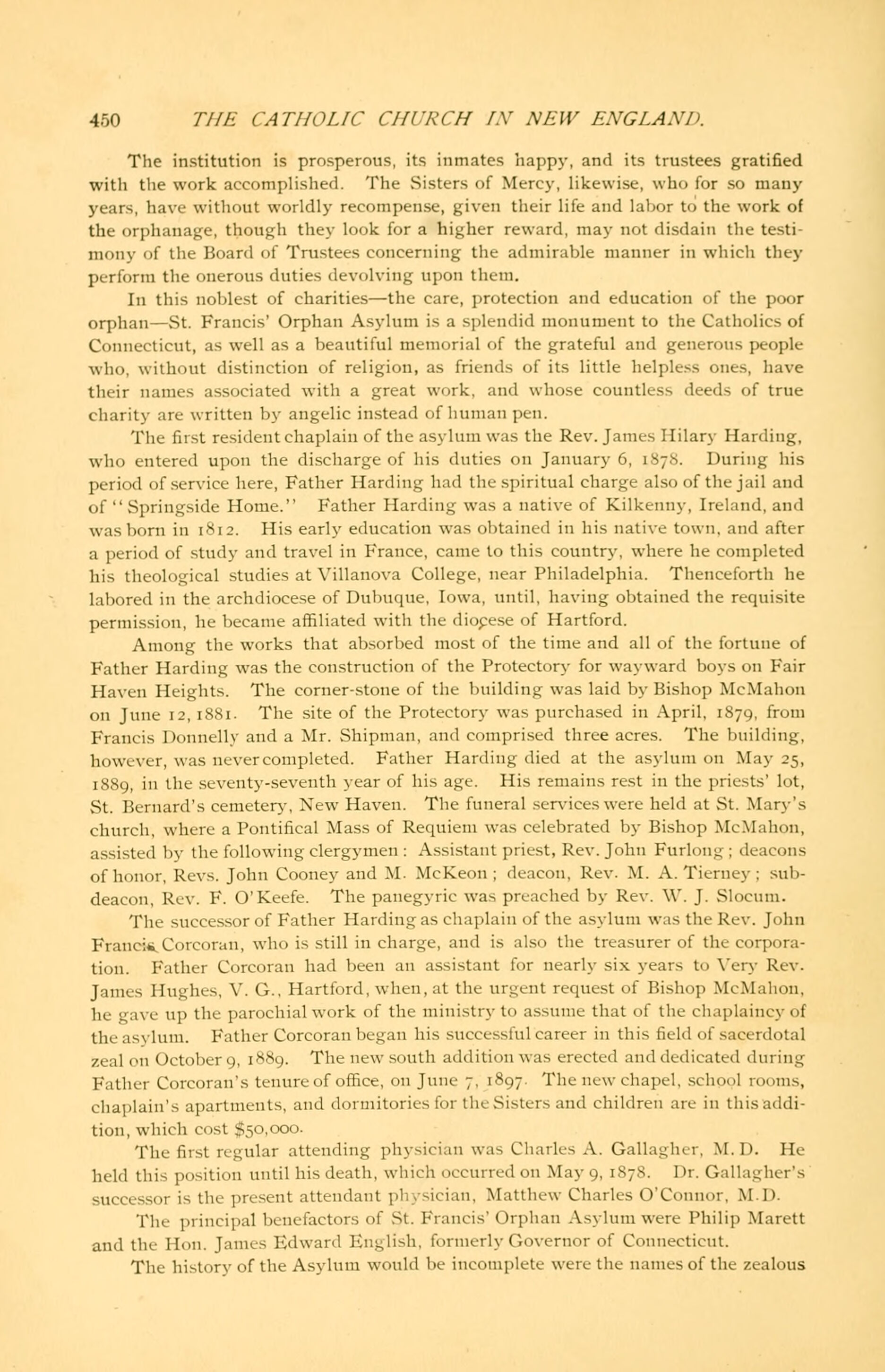
Parish and military history add further chapters. O’Donnell’s 1900 account says that Father Murphy, who completed St. Mary’s Church, also had charge of Saint Bernard Cemetery. The same volume records James Hilary Harding’s funeral at St. Mary’s and burial in the cemetery’s priests’ lot. Modern church photographs illustrate that connected setting; they do not depict those nineteenth-century events. At the cemetery itself, the Soldiers’ Monument marks Civil War remembrance. David F. Ransom’s survey records authorization in 1886 and payment in 1889, dating the monument approximately 1889 while noting that no dedication record was found. That evidence takes precedence over an unsupported precise dedication date in a later photo caption.
More photographs and records at other archives