Read the full story of Ansonia’s Industrial Riverfront
COLLECTION HISTORY
The people behind the place.
The Liberty Street brass complex brought together plants with distinct origins: Wallace & Sons, established in 1848, and Ansonia Brass & Copper, organized in 1854. Their work included rolled sheet metal, drawn wire and other metal products. [CT044-S01]
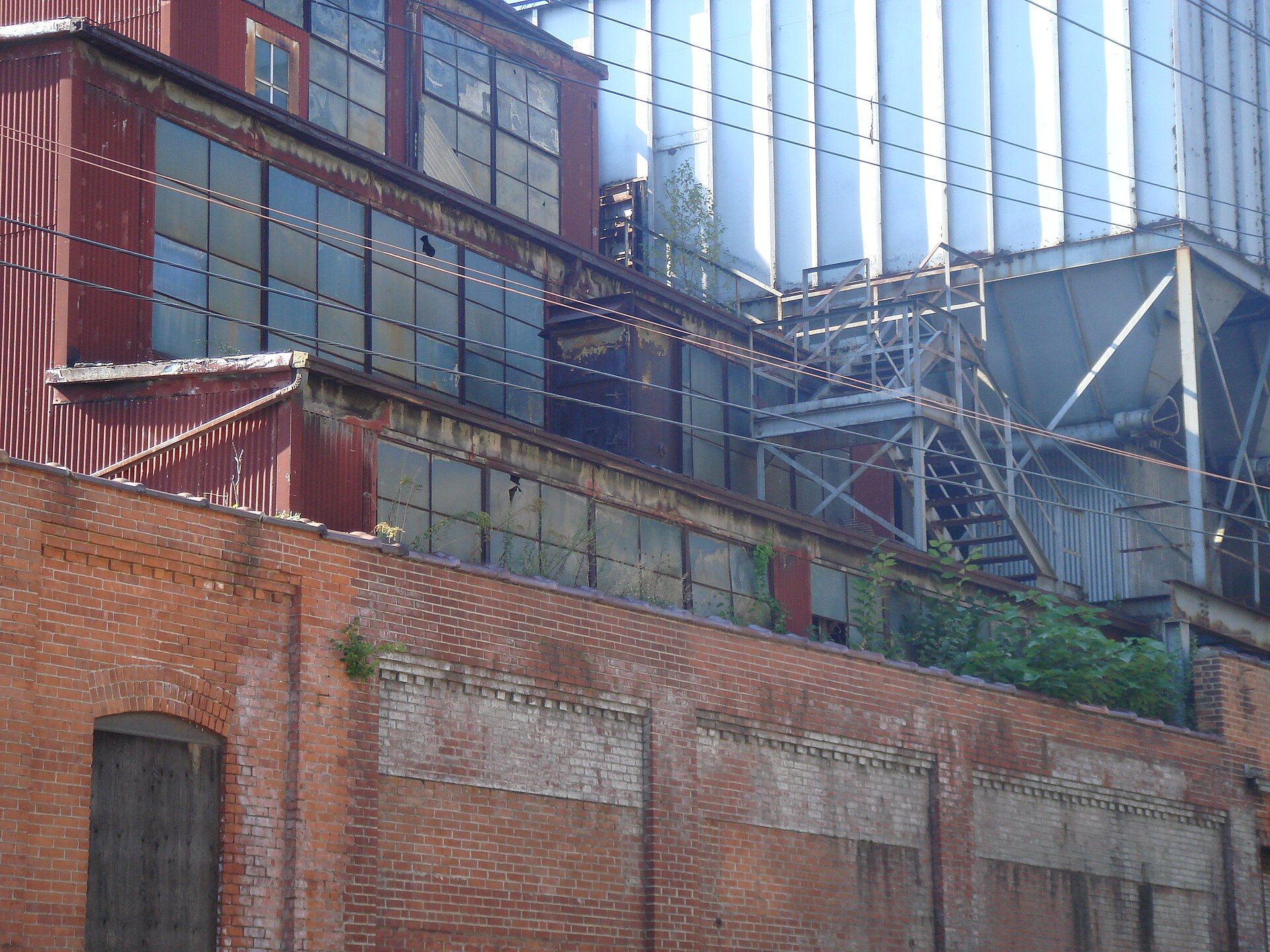
The canal, river and railroad helped organize the industrial landscape. Preservation Connecticut describes rolling mills, casting shops, tube-drawing rooms and shipping buildings. A general photograph of an Ansonia factory is not automatically a photograph of American Brass; each image retains its documented identification. [CT044-S01]
Wallace & Sons and Ansonia Brass & Copper began separately in 1848 and 1854. Following both origins prevents the later industrial landscape from being treated as a single company present from the beginning. The products named in the preservation record—sheet metal, wire and tubes—also point to different operations. A waterfront industrial district was a connected group of workplaces, each with its own materials, machinery and history. [CT044-S01]
The canal, river and railroad help explain the arrangement of rolling mills, casting shops and shipping buildings. They are evidence for how a place worked, not simply scenery around the factories. Ansonia's broader photographic record includes other manufacturers, so the archive retains each caption's company name. A view of Farrel or another works supplies industrial-neighborhood context without being relabeled American Brass. Comparing these records makes industrial growth a spatial story while leaving business ownership to directories, maps and corporate documents. [CT044-S01]
HISTORICAL PERIOD1848 and 1854 predecessor firms
SITE & COLLECTION STATUSHistoric industrial landscape; individual building conditions vary
New Haven County · 2 included photographs
Research edition: September 12, 2026
About this research edition. A selected, source-based research collection for New Haven and Fairfield counties. Includes credited photographs where reusable images were located, historical interpretation and links to supporting records. It is a growing inventory, not an exhaustive survey. Photographs retain their individual dates and reuse terms; images do not establish present access conditions.