Read the full story of Cos Cob Power Station
COLLECTION HISTORY
The people behind the place.
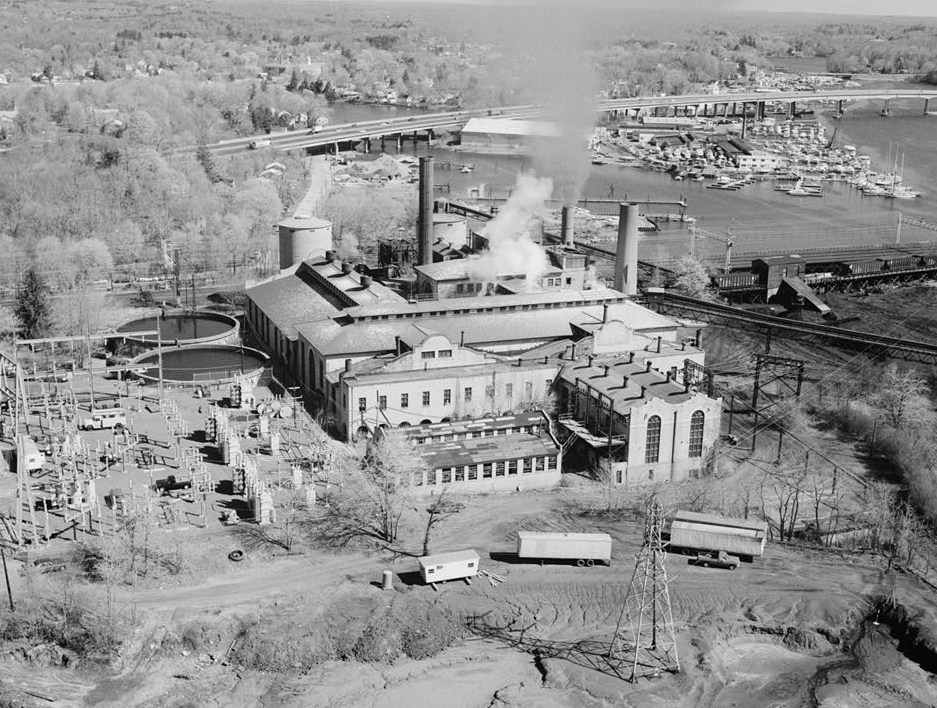
The Cos Cob station was built in 1907 to supply electricity for the New Haven Railroad. Its coal-fired steam turbines supported the railroad’s alternating-current electrification. The plant belongs to the history of the whole transport system, alongside locomotives, overhead wires and substations. [CT070-S01] [CT070-S02]
ASME dates the end of plant operation to October 1986; broader accounts describe decommissioning in 1986–1987. The building was demolished in 2001 despite its historic recognition. Part of its former site became public parkland. Survey photographs preserve the building and machinery, and ASME identifies a commemorative plaque at Cos Cob Park. [CT070-S01] [CT070-S02]
Electric trains depended on a network extending beyond the tracks. Built in 1907, Cos Cob's coal-fired steam turbines supplied the New Haven Railroad's alternating-current system. The station belongs alongside locomotives, wires and substations in an account of electrification. Machinery photographs help make this otherwise hidden part of a passenger journey visible. [CT070-S01] [CT070-S02]
ASME's October 1986 operating-end date and broader 1986–1987 decommissioning accounts describe related but distinct events. Demolition in 2001 was a later physical ending, despite historic recognition. Parkland and a commemorative plaque subsequently preserved another kind of public connection with the site. Survey photographs now carry evidence of rooms and equipment no longer available to inspect in place. Comparing them with the later landscape raises a question about what documentation can preserve when a building itself is lost. [CT070-S01] [CT070-S02]
HISTORICAL PERIOD1907–1986/87 operation; 2001 demolition
SITE & COLLECTION STATUSDemolished railroad power plant; partly reused as parkland
Fairfield County · 4 included photographs
Research edition: September 12, 2026
About this research edition. A selected, source-based research collection for New Haven and Fairfield counties. Includes credited photographs where reusable images were located, historical interpretation and links to supporting records. It is a growing inventory, not an exhaustive survey. Photographs retain their individual dates and reuse terms; images do not establish present access conditions.



.jpg)