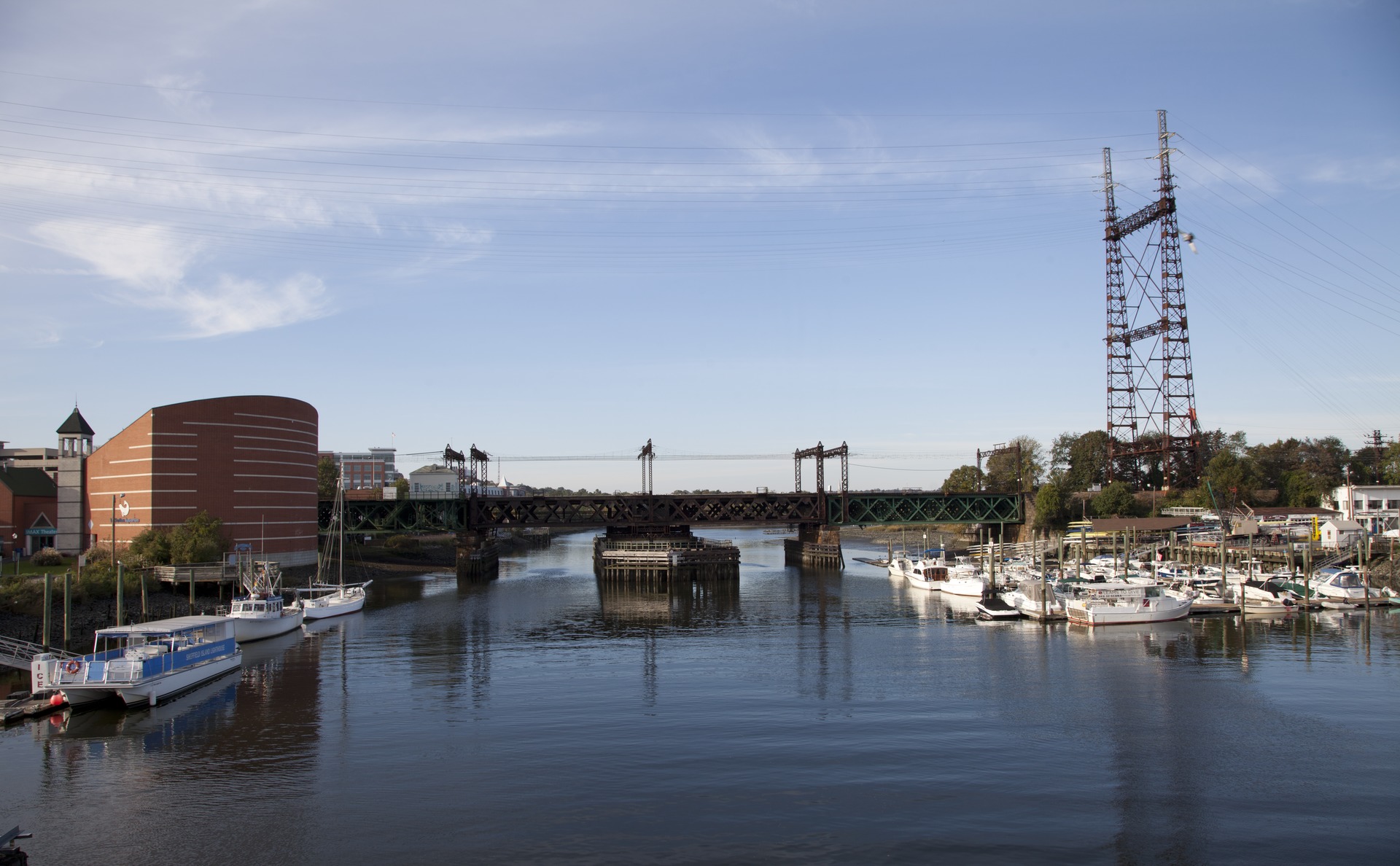
Norwalk Harbor, Norwalk, Connecticut LCCN2012631498 · Carol M. Highsmith / The George F. Landegger Collection of Connecticut Photographs, Library of Congress / Public domain
OPENING / FIRST RECORDED DATENineteenth-century oyster industry
FOUNDED / HISTORICAL PERIODNineteenth-century oyster industry
Historic working waterfront; an industry with continuing activity
LOOK CLOSER · OPEN ANY IMAGE
The story in photographs
5 images
10 October 2011
Norwalk Harbor, Norwalk, Connecticut
Norwalk Harbor, photographed by Carol M. Highsmith on 10 October 2011. Harbor and steamboat subjects only; these photographs do not specifically document oyster harvesting or oyster boats.
Image credit & source
Carol M. Highsmith / The George F. Landegger Collection of Connecticut Photographs, Library of Congress / Public domain
Norwalk Harbor, photographed by Carol M. Highsmith on 10 October 2011. Harbor and steamboat subjects only; these photographs do not specifically document oyster harvesting or oyster boats.
Image credit & source
Carol M. Highsmith / The George F. Landegger Collection of Connecticut Photographs, Library of Congress / Public domain
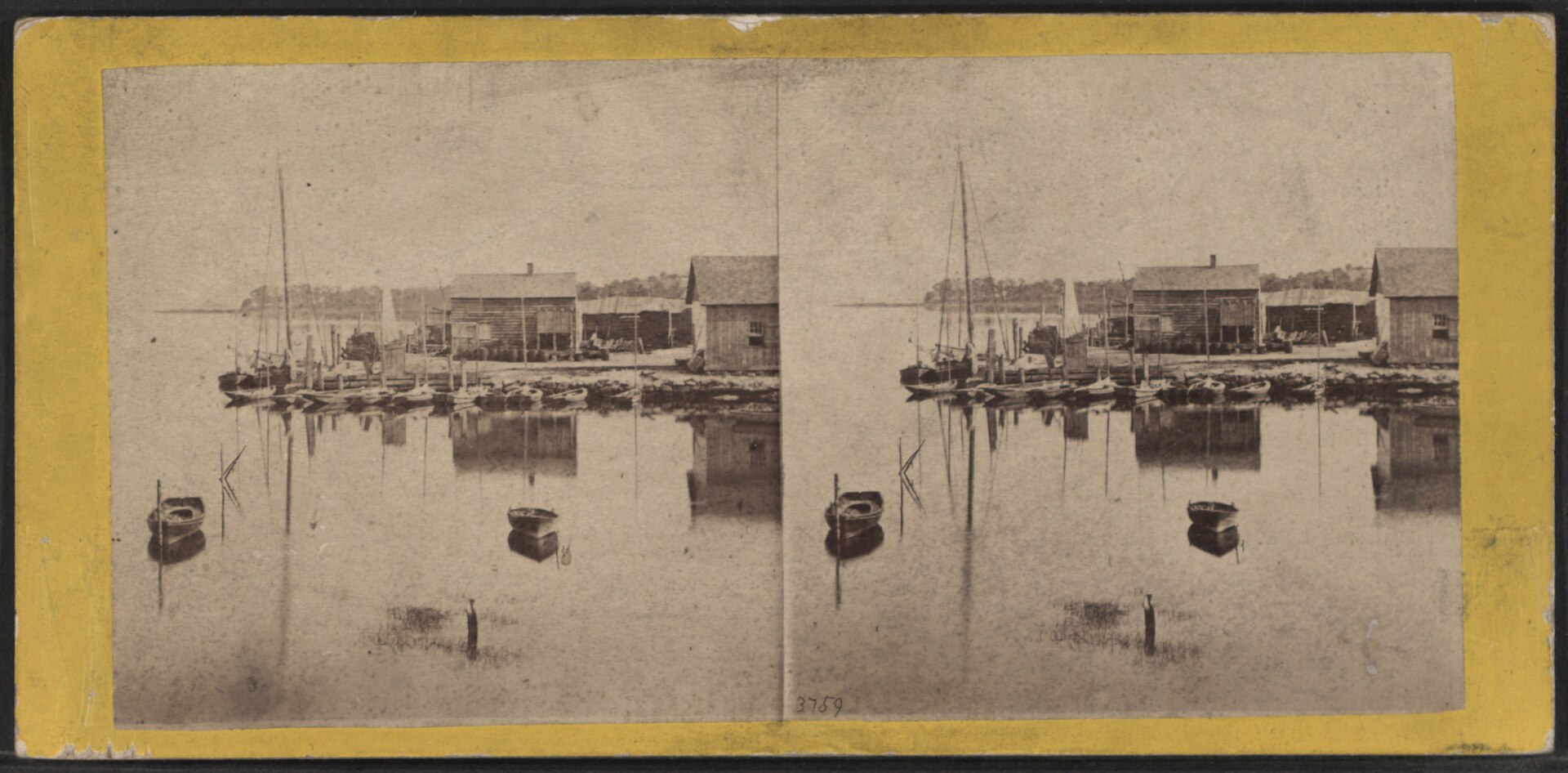
Norwalk Harbor and Steam Boat dock, by Whitney, Beckwith & Paradice
Norwalk Harbor and steamboat dock, approximately 1865–1870. Harbor and steamboat subjects only; these photographs do not specifically document oyster harvesting or oyster boats.
Image credit & source
Whitney, Beckwith & Paradice / New York Public Library / Public domain
Read the full story of Norwalk Harbor & the Oyster Economy
COLLECTION HISTORY
The people behind the place.
CT Humanities identifies oyster farming as a dominant Norwalk industry by 1880, supported by a large steam-powered fleet. This waterfront economy connected harvesting grounds, vessels, shore facilities and markets. Its industrial landscape extended onto the water. [CT075-S01] [CT075-S02]
Norwalk Historical Society has also documented oystering through the work of photographer Bill Whitbeck. Historical harbor views and modern documentation represent different periods of the industry. A photograph of boats alone cannot establish harvest volumes, ownership of beds or the experiences of everyone who worked aboard. [CT075-S01] [CT075-S02]
Oyster farming's prominence by 1880 involved more than boats in a harbor. Harvesting grounds, a steam-powered fleet, shore facilities and markets connected water-based work to the city. The industry's territory extended beyond a conventional factory boundary, making maps and waterfront photographs important companions to written business histories. [CT075-S01] [CT075-S02]
The later photographs associated with Bill Whitbeck document another period of oystering. Their dates should remain distinct from nineteenth-century harbor views. Boats and equipment can reveal visible methods and settings, but cannot establish harvest volumes, ownership of beds or the experience of every crew member. Those questions require licenses, accounts, regulations and first-person evidence. Reading the different sources together places labor and the working environment at the center of Norwalk's maritime story rather than treating the harbor simply as a scenic backdrop. [CT075-S01] [CT075-S02]
HISTORICAL PERIODNineteenth-century oyster industry
SITE & COLLECTION STATUSHistoric working waterfront; an industry with continuing activity
Fairfield County · 5 included photographs Research edition: September 12, 2026
About this research edition. A selected, source-based research collection for New Haven and Fairfield counties. Includes credited photographs where reusable images were located, historical interpretation and links to supporting records. It is a growing inventory, not an exhaustive survey. Photographs retain their individual dates and reuse terms; images do not establish present access conditions.
THE SEARCHABLE CATALOG
Images, maps & original records
Search includes catalog notes and the OCR text included with this edition. OCR may misread names or dates; use the original scan to verify a match.
Supporting source for the collection’s history, chronology and research notes. Harbor photographs and waterfront records broaden industrial history beyond the factory wall.
Supporting source for the collection’s history, chronology and research notes. Harbor photographs and waterfront records broaden industrial history beyond the factory wall.
Extract the ZIP and open START_HERE.html. It includes the catalog, selected images, acquired source text, credits and a searchable SQLite database. New photo additions are hosted in the SGC media library and require an internet connection; original bundled images remain available offline.