Read the full story of Pequonnock Valley & the Former Rail Corridor
COLLECTION HISTORY
The people behind the place.
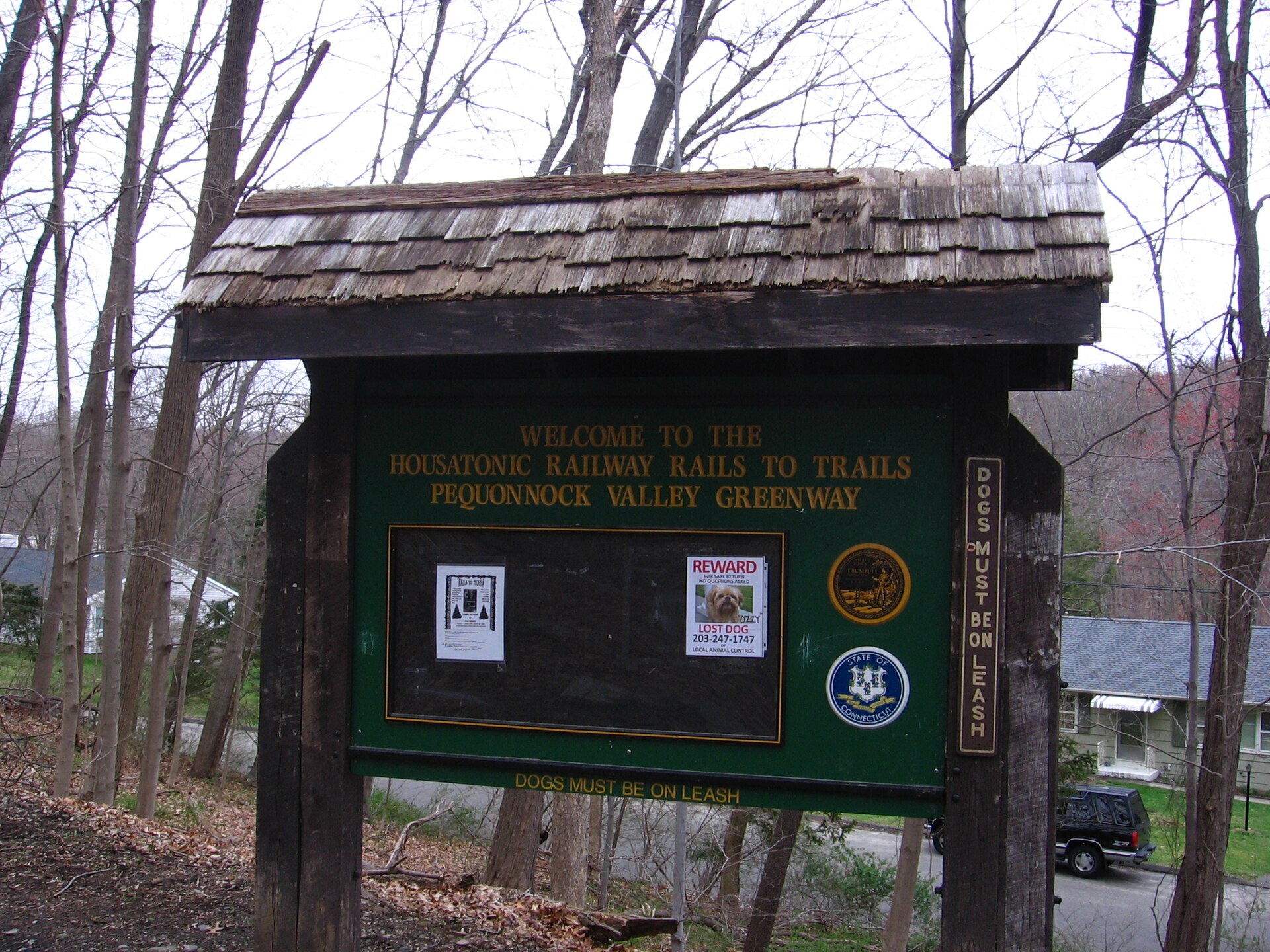
Trumbull identifies a flat 2.5-mile former railroad bed within its Pequonnock River Valley park. The wider trail project connects communities from Bridgeport toward Newtown, reusing former railroad land as walking and cycling routes. [CT057-S01]
The river valley also held water-supply infrastructure. Rail grades, river works and later recreation therefore occupy overlapping ground. A trail photograph is evidence of the corridor’s present form, while historic maps are needed to locate sidings, stations and former industrial connections. [CT057-S01]
A relatively level former rail bed offers a different experience from surrounding slopes and riverbanks. Trumbull's identification of a 2.5-mile section anchors this history in a particular local stretch, while the wider trail links several communities. The route's later use for walking and cycling is a new transportation and recreational chapter built on an older alignment. [CT057-S01]
Rail grades overlap with water-supply works and the river landscape. These features need individual identification: a stone wall in a trail photograph is not automatically a railway structure. Historical maps can show stations, industrial connections and sidings that a modern path conceals. Comparing the records explains both continuity and loss—people still move along the corridor, but its destinations, equipment and purposes have changed. A present trail view should retain its date rather than be used as evidence of railroad-era conditions. [CT057-S01]
HISTORICAL PERIODHistoric railroad bed; later trail conversion
SITE & COLLECTION STATUSFormer rail corridor reused for public trails
Fairfield County · 3 included photographs
Research edition: September 12, 2026
About this research edition. A selected, source-based research collection for New Haven and Fairfield counties. Includes credited photographs where reusable images were located, historical interpretation and links to supporting records. It is a growing inventory, not an exhaustive survey. Photographs retain their individual dates and reuse terms; images do not establish present access conditions.