Read the full story of Silver Sands & Charles Island
COLLECTION HISTORY
The people behind the place.
State Parks records the loss of 75 homes in the 1955 hurricane and the acquisition of more than 300 parcels that led to Silver Sands becoming a state park in 1960. Cottage foundations in the marsh preserve traces of the earlier neighborhood. [CT049-S01]
Charles Island had different uses from the mainland: the state history identifies a seaside resort and a religious retreat before its role as protected bird habitat. The Captain Kidd treasure story is presented as a legend, not an established archaeological discovery. [CT049-S01]
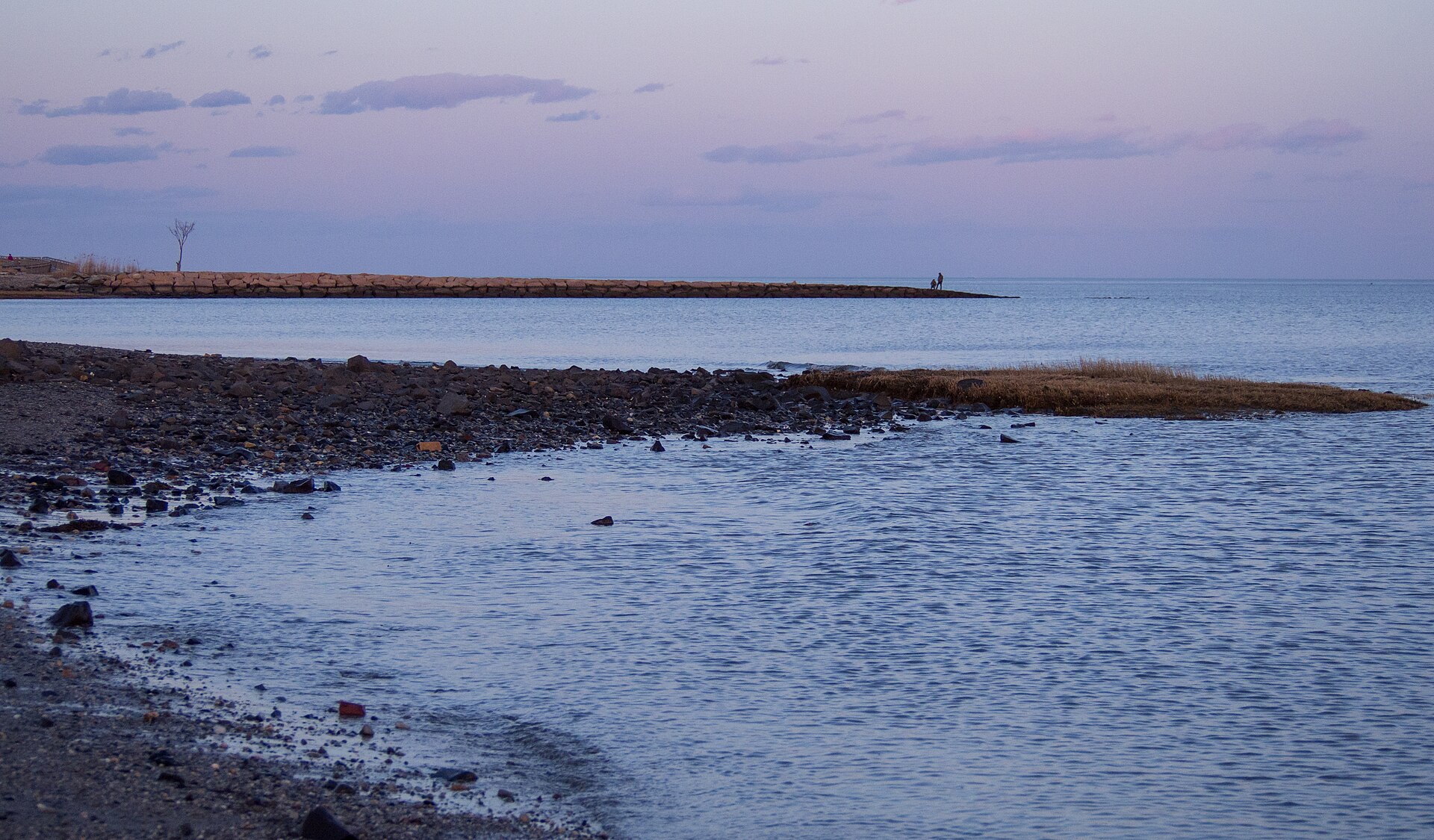
Silver Sands became a state park through changes to an inhabited shoreline. The state's account of 75 homes lost in the 1955 hurricane and the assembly of more than 300 parcels brings former residents and property boundaries into a landscape now often photographed as beach and marsh. The park's 1960 creation was therefore a change in use and stewardship, not the beginning of the land's history. [CT049-S01]
Cottage foundations preserve physical traces of that earlier neighborhood, while Charles Island carries a separate sequence of resort, retreat and habitat uses. These places can be read together without giving every feature the same chronology. A present-day photograph shows a particular shoreline at a particular time; historical maps and family records are needed to recover vanished buildings and residents. The treasure legend is part of the place's storytelling tradition, but it supplies no evidence of a discovered cache. [CT049-S01]
HISTORICAL PERIOD1960 state park designation
SITE & COLLECTION STATUSState park and wildlife habitat; former cottages and island uses
New Haven County · 3 included photographs
Research edition: September 12, 2026
About this research edition. A selected, source-based research collection for New Haven and Fairfield counties. Includes credited photographs where reusable images were located, historical interpretation and links to supporting records. It is a growing inventory, not an exhaustive survey. Photographs retain their individual dates and reuse terms; images do not establish present access conditions.



.jpg)
.jpg)
.jpg)