Read the full story of Weir Farm: Art & a Working Landscape
COLLECTION HISTORY
The people behind the place.
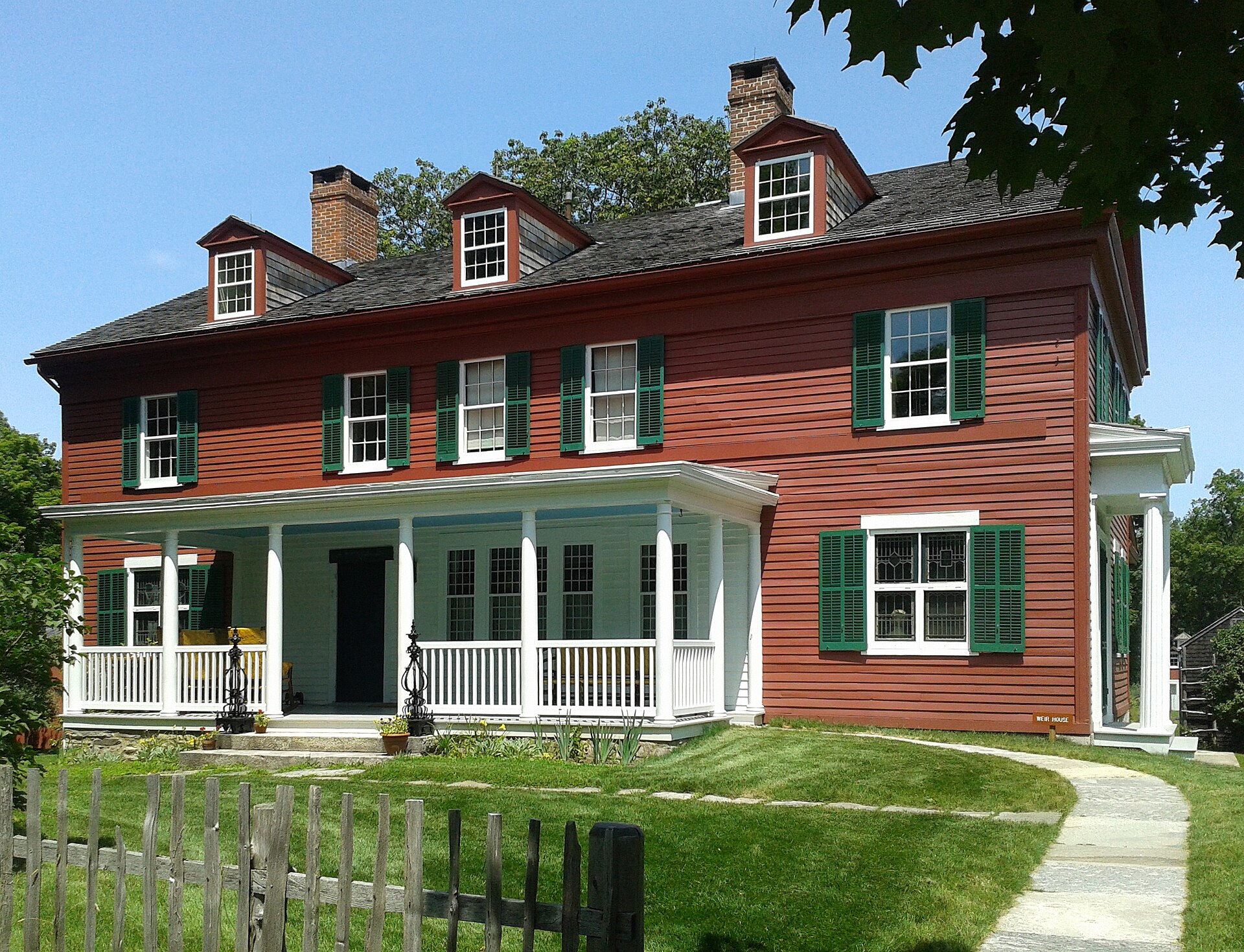
Julian Alden Weir acquired his Branchville farm in 1882. The National Park Service describes how he painted there for nearly four decades, joined by other artists. Dorothy Weir Young, Mahonri Young, and later Sperry and Doris Andrews continued its artistic life. [CT056-S01] [CT056-S02]
The property was also a working farm. Barns, a caretaker’s house, an ice house and other outbuildings supported the household. The gardens and pond became subjects and settings for art. Studying those spaces together keeps the people who maintained the land in the story. [CT056-S01] [CT056-S02]
Weir's purchase in 1882 began an artistic chapter that continued through later residents and artists. The farm was not simply a background chosen for paintings. Its pond, gardens and buildings were places of work, maintenance and daily life as well as subjects for art. The story connects creative practice with the practical support of a household and farm. [CT056-S01] [CT056-S02]
Barns, the caretaker's house and an ice house make that supporting work visible. A studio image and a service-building image can therefore tell complementary stories. Later preservation gathers those spaces into a public interpretation, but the structures retain different uses and dates. Keeping Dorothy Weir Young, Mahonri Young and the Andrews family in the chronology also prevents the place from ending historically with one famous owner. The landscape's continuing artistic life becomes a sequence of people and choices rather than a frozen scene. [CT056-S01] [CT056-S02]
HISTORICAL PERIOD1882 Weir acquisition
SITE & COLLECTION STATUSNational historical park; studios, farm buildings and gardens
Fairfield County · 6 included photographs
Research edition: September 12, 2026
About this research edition. A selected, source-based research collection for New Haven and Fairfield counties. Includes credited photographs where reusable images were located, historical interpretation and links to supporting records. It is a growing inventory, not an exhaustive survey. Photographs retain their individual dates and reuse terms; images do not establish present access conditions.



.jpg)
.JPG)