Read the full story of Yale & Towne Works, Stamford
COLLECTION HISTORY
The people behind the place.
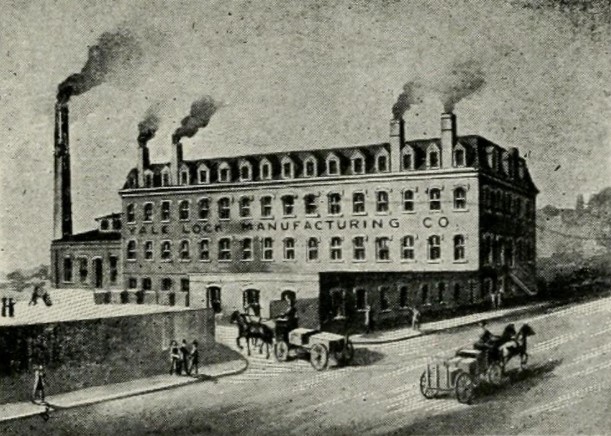
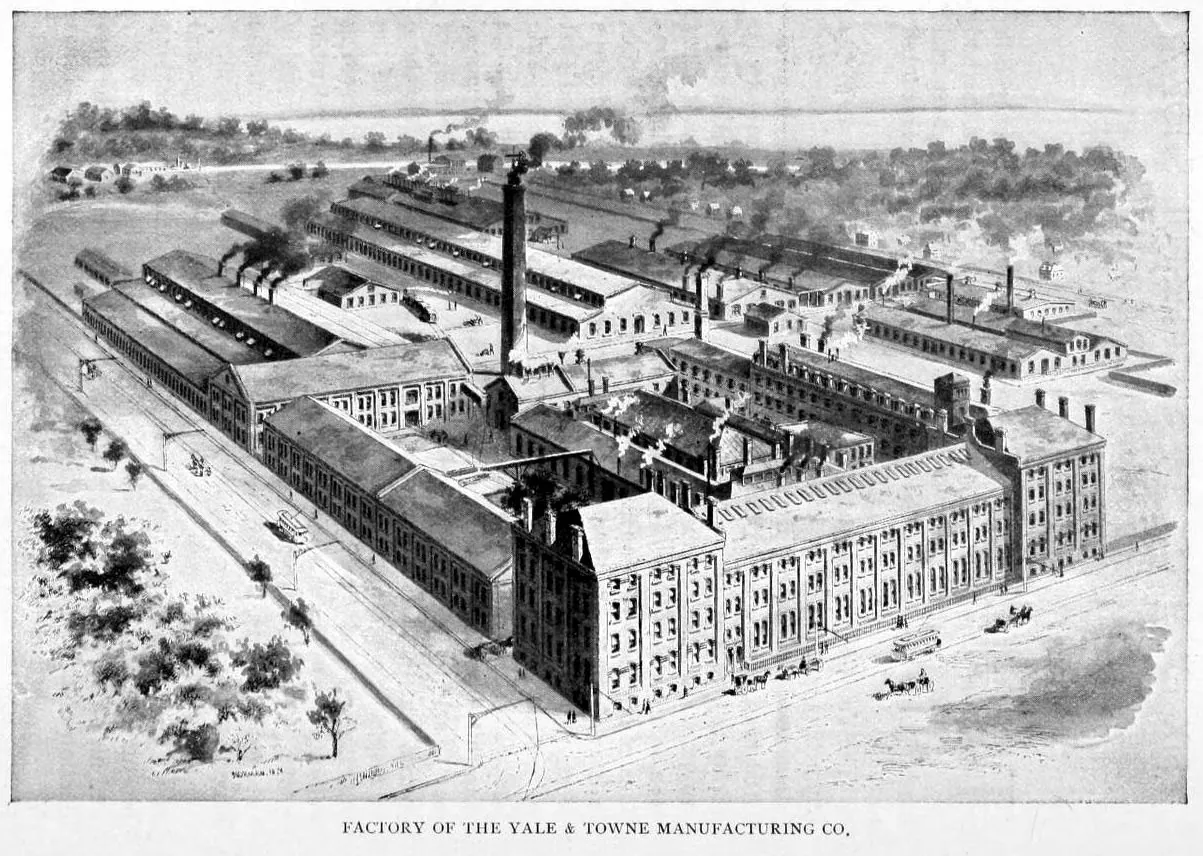
Preservation Connecticut records more than fifty buildings erected between 1869 and 1928 in the Yale & Towne complex. Its products expanded from locks to hardware, safe-deposit boxes, winches and electric hoists. Factory growth changed the scale and organization of the surrounding South End. [CT068-S01]
The buildings also record changing industrial construction. Earlier brick and timber factories were followed by steel-framed foundries and reinforced-concrete manufacturing blocks. Yale & Towne relocated in the 1950s; subsequent reuse and building losses belong to a different period from the original manufacturing history. [CT068-S01]
More than fifty buildings erected between 1869 and 1928 record a long process of expansion. Locks, other hardware, safe-deposit boxes, winches and electric hoists required different spaces and skills. This range of products makes the works a useful example of an enterprise whose familiar name covers more than one line of manufacture. [CT068-S01]
Brick-and-timber structures, steel-framed foundries and reinforced-concrete blocks preserve successive building methods. Their differences can help readers understand the complex as a changing working environment rather than one factory built at a single moment. The company's relocation in the 1950s began a later history of reuse and loss. Factory-era photographs, tool-room views and later exteriors can be compared to follow that transition, while directories and employment records are needed to connect the changing buildings to the people living in Stamford's South End. [CT068-S01]
HISTORICAL PERIOD1869–1928 factory development
SITE & COLLECTION STATUSFormer factory district; surviving buildings and later reuse
Fairfield County · 1 included photographs
Research edition: September 12, 2026
About this research edition. A selected, source-based research collection for New Haven and Fairfield counties. Includes credited photographs where reusable images were located, historical interpretation and links to supporting records. It is a growing inventory, not an exhaustive survey. Photographs retain their individual dates and reuse terms; images do not establish present access conditions.